
Vacuum and mop
Useful when this use case matters more than a generic top pick.
See use-case analysis
Key points
- Real fit
- Dynamic selection
7 Models reviewed
Reviews and comparisons for Robot Vacuums, focused on navigation and app, cleaning performance so you can choose by use case and budget.
These shortcuts come from the category's active use cases and stay in sync with each cohort analysis block.
Useful when this use case matters more than a generic top pick.
See use-case analysisSearch by text, sort products, and surface the key features that matter most to you.
6 products
No products match that search or filter combination.
We compare 7 published robot Vacuums models across catalogue depth, editorial score, user average on a 0-10 scale, average price and the axes where each maker stands out.
roborock leads editorial average (9.1); roborock stands out with users (8.5); eufy has the lowest average price (£476).
Comparable subcategories
Premium
Budget


Quick comparisons
Select 2 products to see the comparison in this section.


No products match that filter combination.
Use-case analysis
This section separates Vacuum and mop within Robot Vacuums. Vacuum and mop is valid only when explicit evidence makes it the main buyer route. The selection is hydrated from published reviews, current price context and editorial scoring.
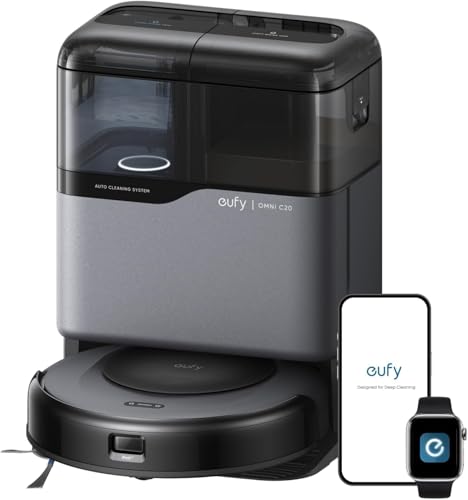
eufy E25
Auto-empty dock · Mop lift
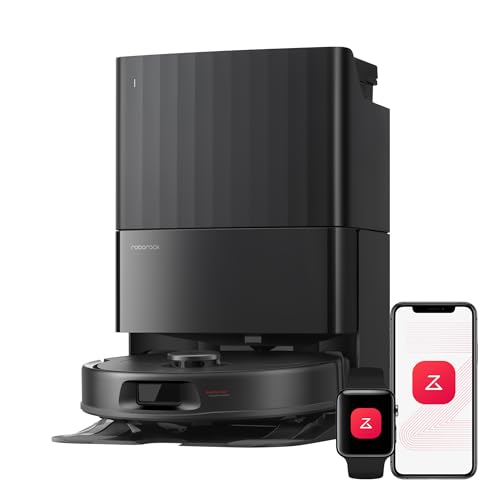
roborock Qrevo S Pro
LiDAR · Auto-empty dock
eufy E25 Omni
Mop lift · Obstacle detection
Updated: 2026-10-19 02:11 UTC
Robot vacuum cleaners split by how well they fit a real home, not by headline specs alone. The main differences are navigation, cleaning performance, mopping quality, and how much upkeep the dock and brushes create after the first week.
| Use case | Prioritise | Avoid paying more for |
|---|---|---|
| Daily flat | Reliable navigation, room control, low setup friction | Unused premium automation |
| Pet hair home | Hair pickup, tangle handling, strong carpet performance | Weak brush design |
| Mixed floor mop | Mop lift, water control, hard-floor coverage | Basic dragging mop systems |
| Small home budget | Simple navigation, solid vacuuming, easy maintenance | Complex dock systems |
| Low-effort automation | Self-emptying, app routines, obstacle handling | Manual bin emptying |
This matters most if you want the robot to clean rooms in a predictable way and avoid getting stuck or missing areas.
This matters in homes with cables, toys, chair legs, or clutter, because poor detection turns automation into supervision.
This matters if you need the robot to lift dust, crumbs, and pet hair rather than just move around the floor.
This matters when the home has rugs or carpet and you want better pickup without manual repeat runs.
This matters only if hard-floor washing is a real buying need, because vacuuming and mopping are not equally strong in every robot.
This matters when you want less weekly maintenance, especially with self-emptying or mop-washing docks.
This matters if you want schedules, room zones, and repeatable cleaning without starting the robot manually each time.
This matters in pet homes or long-hair households, where brush tangles and filter cleaning can become the main chore.
A robot with weak navigation may clean less of the home, waste time, or need more rescue work than the spec sheet suggests.
Some robots vacuum well but mop poorly, so hard floors may still need manual washing.
Self-emptying and mop-washing docks reduce effort, but filters, bags, pads, and cleaning still add ongoing friction.
Pet-friendly claims do not guarantee strong hair pickup or low tangling unless the product evidence shows it.
Advanced mapping, voice control, or complex routines add cost only when they solve a real home layout or cleaning habit.
We assess each model by real buyer fit, confirmed specs, current price, availability and visible customer feedback. The recommendation depends on whether navigation, cleaning performance and dock maintenance make sense for the way the product will actually be used.
For robot vacuums we review documented evidence around navigation, cleaning, mopping, dock automation, maintenance, price, and user feedback when the sample is useful.
Weight 27%. Navigation, maps, obstacle handling, room zones, schedules, and app routines form the automation layer that decides whether the robot actually saves effort in a real home.
Technical measures
Reading context
Common cautions
Weight 33%. Suction, brush design, carpet boost, pet-hair handling, bin size, and floor transitions decide whether the robot cleans the target home rather than just moving around it.
Technical measures
Reading context
Common cautions
Weight 18%. Mopping is a separate buying decision because a robot can vacuum well and still be weak on hard-floor washing, mop lifting, water control, or mixed-floor use.
Technical measures
Reading context
Common cautions
Weight 22%. The dock, bin, filters, mop washing, drying, consumables, and hair-tangle handling decide whether automation stays low-effort after the first week.
Technical measures
Reading context
Common cautions
Editorial judgement still leaves room for incomplete documentation, weak claims, or practical friction that a spec table does not fully capture.
A product can move down the list when strong headline specs are offset by weak setup, unclear maintenance, subscription friction, poor portability or accessory-only evidence. We do not treat spare parts, mounts, filters or unclear variants as complete products.
Start with the use case that matches your situation, then compare the specs and trade-offs that affect ownership. Prices, availability and new reviews can change the shortlist as better evidence appears.
A robot vacuum is usually best for homes where you want regular floor cleaning with minimal effort, especially flat layouts and hard floors. It is less convincing if the product has no clear navigation, obstacle handling, or room control evidence, because that limits how well it can clean without help.
The most important features are navigation, suction evidence, brush design, carpet handling, and dock type. If a model is meant to vacuum and mop, the mopping system should be judged separately, because good vacuuming does not guarantee effective floor washing.
LiDAR mapping is worth prioritising when the product evidence shows it supports accurate room mapping, zoning, and more reliable routes around the home. If that evidence is missing, do not assume better performance, because mapping quality directly affects how much daily effort the robot actually saves.
Most robot vacuums need regular bin emptying, filter cleaning, brush checks, and occasional hair removal. If the dock is self-emptying or washing, that reduces routine work, but you should still check consumables, drying, and hair-tangle management before buying.
A robot vacuum is a stronger pet-hair choice only when the product evidence clearly shows pet-hair handling, strong suction, and brush design that resists tangles. Without that evidence, it may still clean daily dust, but performance on fur and debris in busy homes is less certain.
A vacuum-and-mop robot can be useful on mixed floors, but mopping quality depends on water control, mop lifting, and how it transitions between surfaces. If those details are not explicitly documented, treat the mopping side as unproven rather than assuming it will wash floors well.

