Review Air Purifiers Philips

Philips Air Purifier 600 Series Air Purifiers - Review and opinions

Price in usual range
See on Amazon
Review updated on
6.8 Overall

Score

CADR and room fit 6.0/10
Filtration standard and stages 7.0/10
Noise and sleep mode 7.7/10
Filter life and running costs 5.8/10
Sensors and smart features 6.7/10
Purifier-fan hybrid evidence 5.8/10
Customer reviews 7.9/10

Is it worth it?

If you want a compact air purifier for a bedroom, nursery, or small living space, this Philips 600 Series makes sense because it pairs HEPA filtration with a smart sensor, app control, and a genuinely low sleep-mode noise level. The clear trade-off is that it is built for controlled, everyday purification rather than brute-force room clearing, so it suits buyers who value quiet background cleaning more than a big-room airflow machine.

I would put this in the “buy for a bedroom and leave it running” camp. The 44 m² coverage claim, 170 m3/h CADR, 12 W maximum draw, and 19 dB sleep mode create a sensible route for allergy-focused use, but the app and connectivity side is the part most likely to irritate anyone who wants a flawless smart-home experience. If you want quiet particle removal with low running cost, it is a strong fit; if you mainly want a larger-room purifier with more headroom, look higher up the range.

Clean Air Delivery Rate 170 m3/h
Filter class HEPA
Noise level 19 dB in sleep mode
Power consumption 12 W max
Weight 2.2 kg
Coverage area Up to 44 m2

Quiet bedroom use

The sleep mode runs at 19 dB and dims the display light, which is the sort of setup that lets an air purifier stay in the room all night without becoming the main event.

That matters if you are buying for sleep, asthma support, or a child’s room, because noise and light are the two things that usually spoil the experience first. The practical upside is easy overnight use; the practical limit is that the quietest setting is also the mode you are most likely to leave on for comfort, not for rapid room clearing.
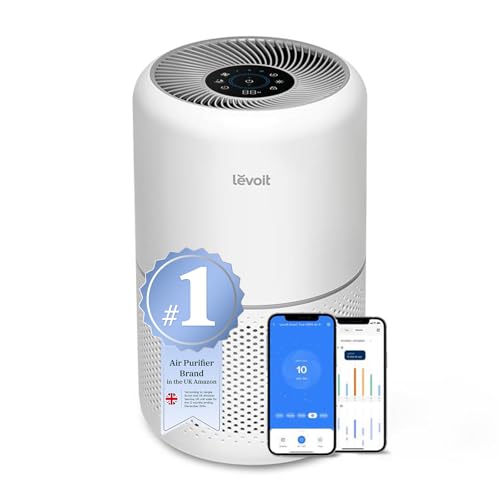
Sensor-led auto mode

The AeraSense sensor and auto mode turn this into a purifier that reacts rather than just runs at a fixed speed, with the app and display giving you a live read on air quality.

That matters because a purifier earns its keep when it adjusts to cooking smells, dust, or pollen without constant manual attention. The upside is convenience and less fiddling; the downside is that the smart controls are only useful if you are happy to rely on the app side as part of the routine.

Filter and running-cost profile

The unit uses HEPA filtration, draws up to 12 W, and has a replacement filter route that is easy to understand from a maintenance point of view.

That matters for anyone who plans to keep it running for long stretches, because the real cost of an air purifier is not just the purchase price but the ongoing filter cycle and the electricity it uses. The upside here is the low power draw and simple upkeep; the trade-off is that ongoing filter spend still belongs in the buying decision, especially if you run it every day.

Room-fit and portability

At 2.2 kg with a compact 24.3 x 23.7 x 34.1 cm body, it is easy to move between rooms or tuck into a corner without dominating the space.

That matters if you want one purifier to cover a bedroom at night and a living area by day. The upside is flexibility and easy placement; the limit is that portability does not change the fact that this is still a compact purifier, so bigger rooms will ask more of it than its size suggests.

Use evaluation

For a bedroom that needs to stay usable overnight, the strongest case here is the combination of low noise, dimmed display light, and automatic adjustment. The 19 dB sleep mode is quiet enough to sit in the background rather than dominate the room, and the 12 W ceiling keeps it in the low-running-cost bracket. That matters because this is the sort of purifier you are meant to leave on, not switch on only when the air feels bad. The payoff is comfort and consistency; the limitation is that you are buying quiet steadiness, not a dramatic blast of airflow for larger open spaces.

In a small room, the 170 m3/h CADR and 44 m2 coverage make the day-to-day experience feel appropriately sized rather than overbuilt. The published “under 17 minutes” cleaning claim for the stated room size translates into a purifier that is meant to keep up with dust, pollen, and pet dander without sounding strained. That lines up with the recurring impression of fast response in auto mode, which is exactly what matters when the unit is left to react on its own. The trade-off is straightforward: if your room is much larger or more open-plan, this is the point where a higher-CADR model becomes the more sensible route.

The smart sensor and app control add real convenience when you want to check air quality without walking over to the unit, and the auto mode makes the purifier feel more hands-off once it is set up. That said, the smart side is the least universally attractive part of the package, because the core value already comes from the filtration and quiet operation. In practice, that means the Philips works best for buyers who want the app as a bonus rather than the reason to buy. If remote monitoring is central to you, the connectivity side is useful; if you mainly want an appliance that cleans air quietly and efficiently, the smart features are secondary.

Maintenance looks manageable rather than fiddly. The replacement filter route is clear, the unit is light at 2.2 kg, and the compact 24.3 x 23.7 x 34.1 cm footprint makes it easy to place on the floor or move between rooms. That combination helps the value case because you are not paying for a bulky machine that is awkward to live with. The one thing that keeps this from feeling like an automatic no-brainer is the proprietary filter cost over time, which matters more if you plan to run it continuously in a dusty or high-allergen home.

Pros

  • Quiet enough for overnight use.
  • Low 12 W maximum power draw.
  • Compact and light at 2.2 kg.
  • Clear HEPA-based purification route for dust, pollen, and pet dander.

Cons

  • App and connectivity can be the weakest part of the experience.
  • 44 m2 coverage is not the right lane for bigger open-plan rooms.
  • Proprietary filter upkeep adds ongoing cost.
  • Sleep mode is quiet, but it is not a high-airflow turbo replacement.

Community

User reviews

The pattern is clear enough: people who want quiet, easy everyday purification tend to be pleased, while the smart side draws the sharpest complaints when it is expected to behave like a perfectly seamless connected device. The practical lesson is that this Philips is best judged as a quiet HEPA purifier first and a smart gadget second.

Lankylad

I have asthma and it has given me great relief from constant coughing, and it runs so quietly that fan noise is never an issue.

Mr.

The purifier itself is great, but the app was a nightmare to keep working continuously.

KatieReadingCorner

We use it for both boys with asthma and there has been no increase in electric usage.

Aggy

I have used my Philips air purifier 600 Series for 18 months and it has kept the kitchen free from cooking smells.

Comparison

Attribute Philips Air Purifier 600 Series Current Levoit Core 300S LEVOIT Core Mini
Price £75.98 £127.47 £42.49
Weight 2.2 kg 3 kg 1.06 kg
Noise level 19 dB in sleep mode quiet operation with sleep mode and dimmed display lights -
Coverage area Up to 44 m2 up to 108 m² -
Editorial score 6.8/10 7.6/10 6.6/10

Against a larger CADR purifier such as Philips’ own 1000 Series route, this model is the better pick if your priority is a bedroom, study, or smaller living room where quiet operation and low running cost matter more than outright room-clearing speed. If you want to clean a bigger open-plan area quickly, the higher-capacity route is the more logical spend.

Compared with a simpler non-connected purifier, the Philips 600 Series gives you more visibility through the sensor and app, which is useful if you want to track air quality and let auto mode do the work. If you dislike app dependence or only want a basic on-off purifier, a simpler model is less likely to frustrate you.

It also sits in a different lane from fan-forward purifier hybrids, because this is clearly about particle capture first, not room airflow as a comfort feature. If you want a purifier that doubles as a noticeable fan, look elsewhere; if you want a quiet HEPA unit that can stay in the room all night, this one makes more sense.

Compare with Compare this model This product stays fixed; add a recommended alternative or search another model in the category.

Compare with

Add a second model to activate the direct comparison.

Conclusion and verdict

For buyers who want a compact, quiet HEPA purifier for a bedroom or smaller living room, this Philips 600 Series is easy to recommend. The combination of 170 m3/h CADR, 44 m2 coverage, 19 dB sleep mode, 12 W maximum power, and simple auto operation gives it a practical, low-friction role that suits everyday use rather than occasional bursts. If your main need is stronger room-wide airflow for a larger space, or if you want app control to be flawless rather than merely useful, this is not the cleanest fit. The better route is the one that values quiet filtration and low running cost over raw capacity, and that is where this Philips is strongest. Check the current offer if that is the lane you want.

Still, compare Philips Air Purifier 600 Series with close alternatives if warranty, noise, real battery life, or included accessories are decisive for you.

See the best price on Amazon Check for today's deals. Free delivery with Prime.

FAQ

What room size is this best for?

It is built around rooms up to 44 m2, so it fits bedrooms and smaller living spaces better than large open-plan areas.

Is it quiet enough for sleep?

Yes, the 19 dB sleep mode and dimmed display make it a strong bedroom choice.